

Picture this: it’s 11 pm. You’ve just drifted off when suddenly – WAH! You drag yourself out of bed, shuffle down the hall, pop the pacifier back into your baby’s mouth, tiptoe back to bed… only to do it all over again at 1 am, 3 am, and 5 am.
Sound familiar? I call this pacifier ping pong, and trust me—if you’re stuck in this game, you’re not alone.

When a pacifier becomes a sleep crutch
Most parents who reach out to me are beyond thrilled to be done with night feeds. “No more bottles at 2 am? Hallelujah!” they say. But then, a new pattern sneaks in.
Instead of feeding, they’re bouncing out of bed every couple hours to be the pacifier fairy. Sure, it feels like progress. Baby’s not eating every hour anymore, and everyone’s grateful for that. But is this sustainable?
Heck no.
It’s just swapping one sleep crutch (feeding) for another (pacifier retrieval service). And all those night wakings? They’re still robbing both you and your little one of solid, restorative sleep.
Why this matters for the whole family
Here’s the thing: as babies grow, they’re wired to start stringing together longer stretches of sleep. That’s how nature gives parents a fighting chance to function (and maybe even have a conversation over coffee that makes sense).
Interrupted sleep night after night isn’t just tough, it’s also a risk factor for postpartum mood and anxiety disorders (PMADs). So when I say helping your baby sleep better is about everyone’s health, I mean it.

But wait, am I anti-pacifier?
No way. I love pacifiers. They’re absolute lifesavers in the newborn days. They help calm fussy babies, soothe pain during shots, and the AAP even recommends them for the first 6 months to help reduce the risk of SIDS.
But (and here’s the kicker)… when your older baby or toddler can’t replace the pacifier on their own, and you’re stuck playing pacifier ping pong all night long? That’s usually our cue to rethink it.
What if your baby can replace the pacifier?
If your little one’s old enough to grab and pop that paci back in themselves, let’s teach them how to do it confidently.
Here’s how:
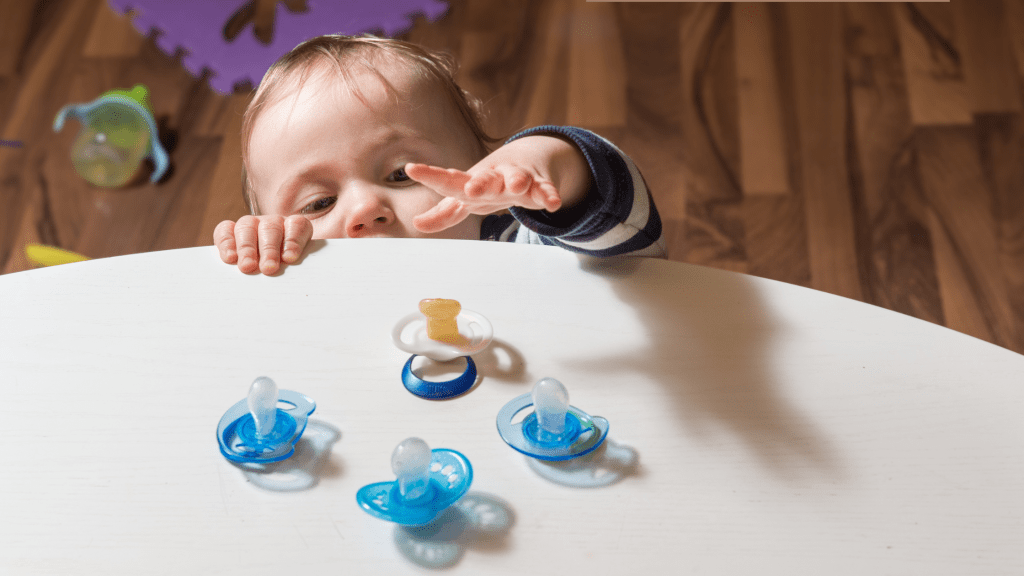
- During playtime, put the pacifier just out of reach and cheer them on as they crawl or scoot to get it. When they triumphantly stick it in their mouth? Throw a tiny parade.
- Load the crib with multiple pacifiers, like an Easter egg hunt at midnight. If one falls out, there’s always another nearby.
- Bonus: get some glow-in-the-dark pacifiers. (Whoever invented those deserves a trophy.)
What if they’re not there yet?
If your baby isn’t quite able to find and replace the pacifier on their own, it may be time to wean it for sleep altogether.
Because once your baby learns to fall asleep without the pacifier, guess what? They’ll be able to settle back to sleep on their own when they stir at night, without needing you to be on-call, round the clock.
Now, fair warning: your little one probably won’t send you a thank you card immediately. Change is hard, and they might protest. That’s normal. Stay confident knowing you’re setting them (and yourself) up for better, healthier sleep.
Ready to stop the pacifier ping pong?
If you’re finding yourself bleary-eyed from all those middle-of-the-night trips to plug the pacifier back in, I’m here for you.
Book a free call with me, and let’s chat about how we can gently guide your baby toward independent sleep, so your whole family can finally get the rest you deserve. 💜
✨ Everyone deserves dreamworthy sleep.
🔗 Learn more about my work as a pediatric sleep consultant in Toronto.

 Dreamworthy